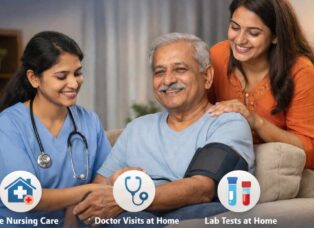
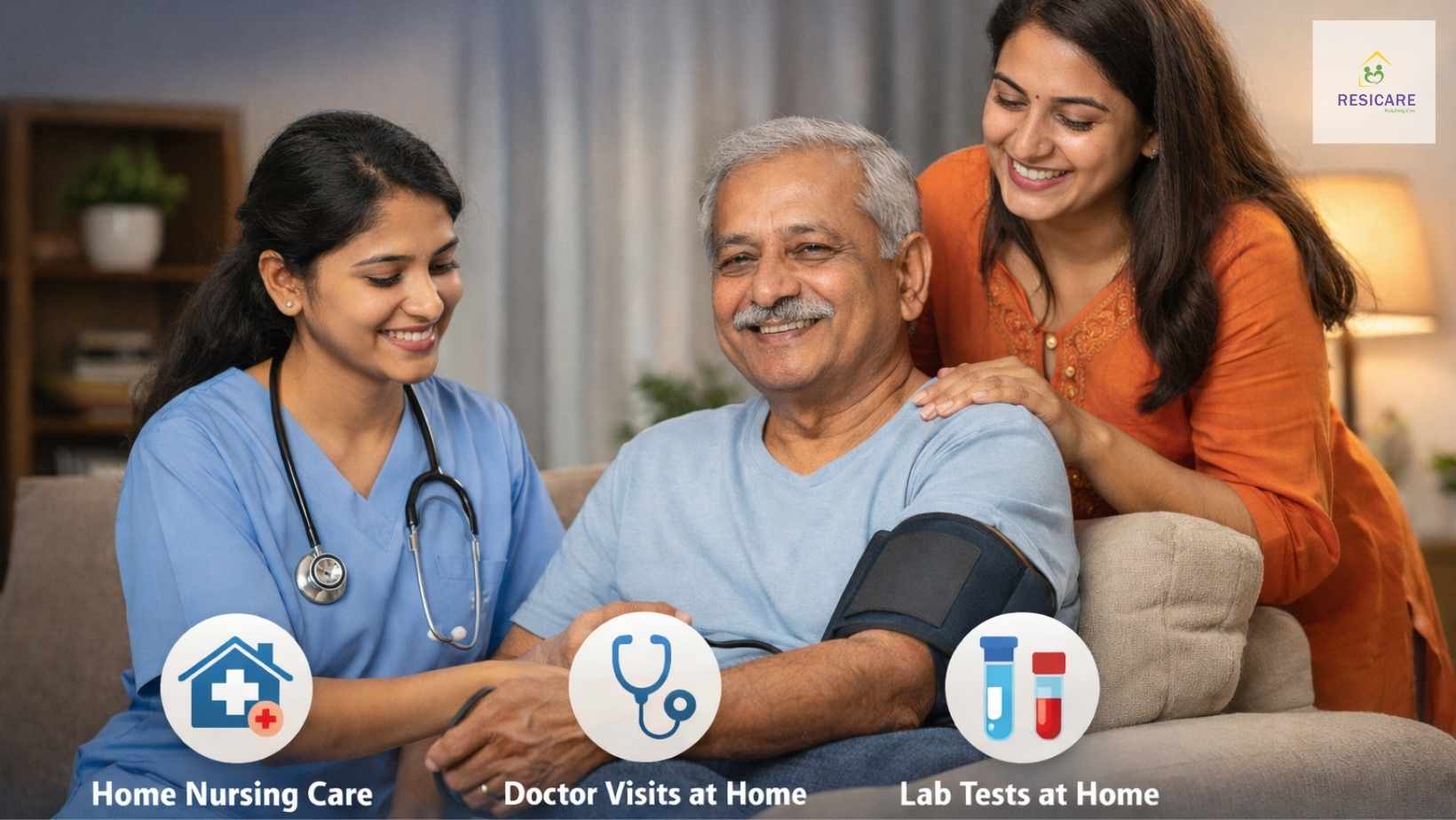
Healthcare has evolved rapidly in the past decade. Hospitals are no longer the only place where treatment and recovery happen. Today, patients can receive professional medical care in the comfort of their homes — safely, conveniently, and often more effectively.
Families are increasingly choosing home-based treatment for elderly parents, post-surgery recovery, chronic illness management, and even advanced nursing care. The shift is not just about comfort; it is about better health outcomes, emotional wellbeing, and personalized attention. At Resicare, we believe recovery happens faster when patients feel secure, supported, and stress-free. Let’s understand why home healthcare is becoming the preferred choice for modern families.
1. Comfort Speeds Recovery
The biggest advantage of receiving medical care at home is emotional comfort.
Hospitals can be overwhelming — noise, unfamiliar surroundings, restricted visiting hours, and lack of privacy often increase stress levels. At home, patients sleep in their own bed, eat familiar food, and stay around loved ones. This reduces anxiety and promotes healing.
Medical studies show that patients recovering in a familiar environment:
- Sleep better
- Experience less stress
- Heal faster
- Require fewer medications for anxiety or pain
For elderly individuals especially, emotional stability plays a major role in recovery.
2. Reduced Risk of Hospital Infections
Hospitals treat hundreds of patients daily. Even with strict hygiene protocols, exposure to infections remains a concern — particularly for:
- Seniors
- Post-surgery patients
- People with weak immunity
- Chronic illness patients
Home healthcare drastically reduces exposure to hospital-acquired infections. Professional caregivers maintain hygiene, sterilization, and monitoring in a controlled environment, making recovery safer.
3. Personalized One-to-One Attention
In hospitals, nurses must manage multiple patients at once. At home, the patient receives dedicated care.
A trained home nurse or caregiver focuses entirely on one individual. This allows:
- Continuous monitoring
- Immediate response to discomfort
- Medication reminders
- Proper diet supervision
- Emotional support
Personalized care significantly improves recovery outcomes and prevents complications.
4. Better Support for Elderly Care
Aging parents often require long-term care rather than short hospital stays. Frequent hospital visits are exhausting and mentally draining for seniors.
Home healthcare provides:
- Mobility assistance
- Bathing & grooming support
- Medication management
- Fall prevention
- Companionship
This helps elderly patients maintain dignity and independence while ensuring safety.
Families also feel reassured knowing their loved ones are being cared for professionally without relocating them to an unfamiliar facility.
5. Ideal for Post-Surgery Recovery
After surgery, patients usually need weeks of monitoring — dressing changes, injections, physiotherapy, and mobility support.
Instead of prolonged hospitalization, recovery at home offers:
- Faster healing due to rest
- Lower medical costs
- Reduced travel stress
- Better family support
Professional nurses handle wound care, vitals monitoring, and rehabilitation exercises, helping patients regain normal life quickly.
6. Chronic Disease Management Becomes Easier
Conditions like diabetes, stroke recovery, Parkinson’s disease, dementia, heart disease, and respiratory illnesses require continuous monitoring rather than emergency treatment.
Home healthcare allows regular observation of:
- Blood pressure
- Oxygen levels
- Sugar levels
- Medication adherence
- Physical changes
Early detection prevents complications and hospital readmissions.
7. Convenient Doctor & Lab Services at Home
Healthcare today is no longer limited to clinic visits. Patients can access comprehensive services without stepping outside.
Modern home healthcare includes:
- Doctor consultations at home
- Nursing procedures
- Physiotherapy sessions
- Blood tests and diagnostics
- Injection & IV therapy
This is especially beneficial for elderly individuals and bedridden patients who struggle with travel.
8. Cost-Effective Healthcare Solution
Hospitalization involves room charges, nursing charges, food charges, and multiple miscellaneous expenses.
Home healthcare eliminates many of these costs while delivering the same professional treatment quality.
Families pay only for the services required — whether a few hours of care daily or 24-hour nursing assistance. This makes long-term care financially manageable.
9. Emotional Wellbeing Improves Healing
Healing is not only physical — it is psychological.
Patients surrounded by family recover faster because:
- They feel motivated
- Depression levels reduce
- Appetite improves
- Cooperation with treatment increases
Especially for elderly patients and children, emotional support plays a critical role in recovery success.
10. Family Participation in Care
Hospital care limits involvement of family members. Home care encourages it.
Caregivers guide family members on:
- Safe mobility assistance
- Diet planning
- Medication reminders
- Emergency response
This collaborative approach improves long-term health management and builds confidence in families caring for loved ones.
The Future of Healthcare Is at Home
Healthcare is moving from hospital-centric treatment to patient-centric care.
People today prefer solutions that are:
- Comfortable
- Preventive
- Personalized
- Accessible
Home healthcare meets all these needs. It allows patients to live normally while receiving professional treatment — something hospitals cannot always provide.
For seniors, chronic patients, and recovering individuals, home care is not just an option anymore — it is often the better medical decision.
Why Choose Resicare?
Resicare provides compassionate and professional medical support tailored to every patient’s condition. Our trained caregivers and nurses ensure safety, hygiene, and emotional care in every visit.