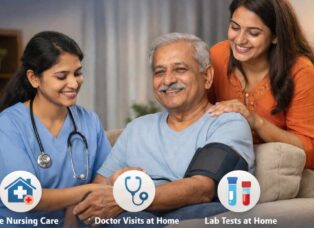

When a loved one—be it an aging parent or a patient recovering from surgery—requires professional assistance at home, the decision-making process can be overwhelming. As you search for the best home care services Bangalore has to offer, you will likely encounter two primary roles: the Home Nurse and the Home Attendant (or Patient Care Giver).
While these terms are often used interchangeably in casual conversation, they represent vastly different levels of medical expertise, legal authority, and daily responsibilities. At Resicare, we believe that making an informed choice is the first step toward ensuring the safety and well-being of your family.
In this exhaustive guide, we break down the nuances between nursing care and attendant care to help you choose the right path for your home healthcare journey.
1. Defining the Roles: Who Does What?
What is a Home Nurse?
A Home Nurse is a medically qualified professional. In the Indian healthcare context, these individuals hold formal degrees or diplomas such as:
B.Sc. Nursing: A 4-year professional degree.
GNM (General Nursing and Midwifery): A 3.5-year diploma focusing on clinical practice.
ANM (Auxiliary Nurse Midwife): A 2-year course focusing on basic healthcare.
A nurse is registered with the State Nursing Council and is trained to handle clinical complexities, emergency response, and the administration of life-saving medications.
What is a Home Attendant?
A Home Attendant (often called a Patient Care Taker) is a non-medical caregiver. While they may undergo certificate-based training for weeks or months, they do not hold a medical license. Their role is centered on “Activities of Daily Living” (ADLs). They are the “helping hands” who ensure the patient is clean, fed, and comfortable.
2. The Clinical Gap: Scope of Care Comparison
The primary difference lies in medical authority. Understanding this is crucial because hiring the wrong professional can lead to medical negligence or safety risks.
Medical Procedures (Nurse Only)
A home nurse is authorized to perform the following:
- Medication Administration: This includes giving injections (Intramuscular, Intravenous, or Subcutaneous) and managing IV drips.
- Wound Care: Cleaning and dressing post-surgical wounds or complex bedsores.
- Tube Management: Inserting or managing Ryle’s tubes (feeding tubes) and urinary catheters.
- Vital Monitoring: Not just recording blood pressure or sugar levels, but interpreting them to detect early signs of clinical deterioration.
- Critical Care: Specialized nurses can manage ventilators or BiPAP machines for ICU-at-home setups.
Personal & Support Care (Attendant Only)
A home attendant focuses on non-clinical support:
- Hygiene Assistance: Bathing, grooming, oral care, and diaper changes.
- Mobility Support: Helping the patient move from the bed to a wheelchair or assisting with light walking.
- Meal Support: Feeding the patient and assisting with basic meal preparation.
- Companionship: Providing emotional support and preventing social isolation.
- Medication Reminders: An attendant can remind a patient to take a pill, but they cannot legally administer an injection.
3. When Do You Need a Qualified Home Nurse?
Choosing a nurse is a necessity rather than a luxury in specific medical scenarios. If you are looking for home care services Bangalore for any of the following, a registered nurse (RN) or GNM is mandatory:
- Post-Surgical Recovery
The first 7 to 14 days after a major surgery (like cardiac surgery or neurosurgery) are critical. A nurse monitors the surgical site for infections, manages pain through clinical means, and ensures the patient is stabilizing as per the doctor’s orders. - Chronic Disease Management
Patients with advanced-stage Parkinson’s, late-stage cancer, or severe respiratory issues require clinical oversight. If the patient is prone to sudden fluctuations in health, a nurse’s ability to provide immediate first aid and coordinate with a hospital is vital. - Palliative and End-of-Life Care
Managing pain and providing comfort to terminally ill patients requires the administration of specialized medications and emotional intelligence that comes with professional medical training.
4. When is a Home Attendant the Right Choice?
If the patient is medically stable but physically frail, a home attendant is often the most practical and compassionate choice.
- Geriatric Support for Healthy Seniors
Many elderly citizens in Bangalore live alone while their children work abroad or in different cities. They may be healthy but struggle with mobility or loneliness. A home attendant provides the safety net they need to prevent falls and ensure they are eating nutritiously. - Chronic but Stable Conditions
If a patient has diabetes or hypertension that is well-controlled by oral medication and only requires periodic monitoring, a trained attendant can assist with daily routines while a family member or visiting nurse handles the medical checks.
5. Cost Considerations: Budgeting for Home Care
When looking for home care services Bangalore, cost is a significant factor. The price difference reflects the years of education and the level of risk the professional carries.
Home Attendants: Generally the most affordable option. Since they do not have medical degrees, their daily or monthly rates are lower, making them ideal for long-term, 24/7 companionship.
Home Nurses: Higher costs are associated with GNM or B.Sc. qualified staff. Their rates are reflective of their professional status and clinical expertise.
The Hybrid Model Strategy: To optimize costs, many families at Resicare adopt a hybrid model. They hire a full-time attendant for daily chores and hygiene, and a “visiting nurse” who comes in for one hour a day to handle injections, wound dressings, or vitals assessment.
6. The Legal and Safety Aspect
It is a common mistake in the home care industry to ask an attendant to “just give one small injection.” This is dangerous and illegal. If an unqualified person performs a medical procedure and a complication arises (such as an allergic reaction to an injection), the legal liability falls on both the agency and the family. Furthermore, an attendant is not trained to recognize the symptoms of an anaphylactic shock or a stroke. For high-risk patients, the presence of a qualified nurse is a life-saving investment.
7. How to Choose: The Resicare Checklist
If you are currently evaluating home care services Bangalore, ask yourself these five questions:
Does the patient have an open wound or a catheter? (If yes, you need a Nurse).
Does the patient require any form of injection? (If yes, you need a Nurse).
Is the patient’s condition stable or unpredictable? (Unpredictable requires a Nurse).
Is the primary need assistance with bathing and eating? (Attendant is sufficient).
Is the care needed for a short-term recovery or long-term aging support? (Short-term medical often requires a Nurse; long-term aging often requires an Attendant).
8. Why Resicare for Home Care Services Bangalore?
At Resicare, we don’t just provide “staff”; we provide a customized care plan. We understand that every home in Bangalore has unique needs.
Vetted Professionals: Whether it is a GNM nurse or a compassionate attendant, every member of our team undergoes rigorous background checks and skill assessments.
Continuous Supervision: Our care coordinators stay in touch with the family to ensure the level of care is adjusted as the patient’s health improves.
Holistic Approach: We combine medical expertise with human empathy, ensuring your loved ones feel respected and cared for, not just “managed.”
Conclusion
Deciding between a home nurse and a home attendant is about balancing medical necessity with personal comfort and budget. While a nurse brings clinical precision and safety, an attendant brings companionship and daily ease.
If you are still unsure which professional fits your requirements, contact Resicare. As a leading provider of home care services Bangalore, we offer free consultations to assess your patient’s condition and recommend the safest, most effective care model.
Protect your family with the right expertise. Choose Resicare for excellence in home care.